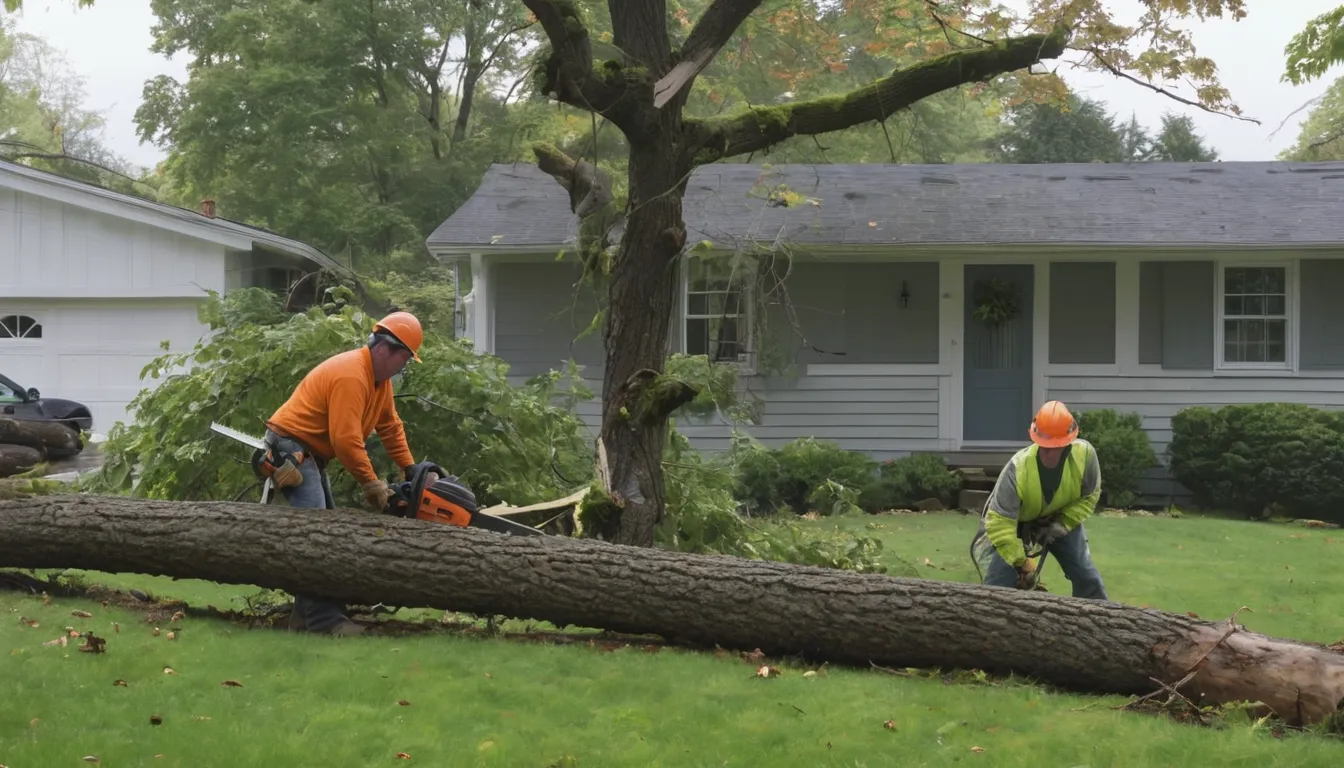
Say you hear a loud crack during a thunderstorm. In the morning, a big limb rests on the porch roof. Or a whole trunk sits across the driveway. That is when emergency tree removal matters most, and when a careful plan protects the house.
Productionresistance Tree Service is a referral service. We do not cut or haul trees. We connect homeowners in St. Paul and the St. Paul area with independent local providers who handle tree falling service, storm tree clearance and cleanup. Availability varies by provider, so ask what they can offer for your situation. On this page you will find safety steps, a look at typical U.S. costs, and questions to ask before work starts. Protect the house first, then get it in writing.
Tree Down? Protect the House First
Picture this yard: the storm has passed, the sky is calm, and a thick trunk is leaning against your roofline. It looks quiet. It is not. Wood under strain can shift without warning.
Keep everyone away from the tree, the roof edge and any ground it touches. Stay out of the area underneath. If the tree has dropped onto the house, think hard before going into that room.
Treat Every Wire as Live
Say a branch is draped over a line running to the house. Do not touch it. Do not move it. Keep kids and pets well back. Report downed lines to your utility company, and wait for them to make the line safe before any tree work begins around it.
What Counts as an Urgent Tree Problem
Not every fallen branch is an emergency. These situations usually are:
- A tree or large limb resting on the house, garage or a vehicle
- A trunk blocking the driveway or the only way out
- A tree leaning more than before, with soil heaved up at the base
- A broken limb hanging in the canopy over a door, walkway or play area
- A tree tangled in power or service lines
What Can Wait a Little
A small branch on the lawn, or a tree that fell in an empty back corner, is a different story. It still needs attention, but it may not need a rush. A provider can often help you sort which is which.
Check Provider Availability
Providers in our network set their own schedules, and storm weeks get busy. The simplest step is to ask early.
Request Service
How Emergency Tree Removal Works
A good job follows a clear order. Knowing it helps you spot a careful provider.
Step One: Look Before Cutting
The provider checks how the tree is resting, where the weight sits, and what it touches. Rooflines, fences, lines and sump pump discharge pipes all matter.
Step Two: Take the Weight Off Safely
Often the tree comes off in sections, not all at once. Pieces may be lowered by rope or lifted with equipment so they do not slam into shingles or siding. Slow can mean safer.
Step Three: Clear and Secure
Once the main load is off, the provider removes the debris and may suggest a tarp for any exposed roof area. Ask what is included in the cleanup.
Storm Tree Clearance After a Big Weather Event
After a hail and wind storm, a whole street may have trees down. Many homeowners are calling at once. Providers must work through the most dangerous jobs first, such as trees on homes or blocking exits.
If your job is less urgent, expect to wait a bit. Take photos from a safe distance and make a note of what you see. That helps the provider plan.
Stump Grinding Comes Later
Once the tree is gone, a stump is left. Stump grinding is usually a separate step, and often a separate line on the quote. Some homeowners do it the same visit. Others wait until the yard settles. Either way, ask so the price is clear and nobody is surprised.
Why the Price Moves
Emergency work often costs more than a planned removal. The tree may sit on a roof. The ground may be soft after spring flooding. Crews may need extra gear or extra care.
Size, location, access and the amount of cleanup all change the total. Prices vary by region and by job, so treat the table below as a rough guide only.
Get It in Writing
Imagine a stranger at the door saying, "Fifteen hundred, cash, right now." Slow down. A written quote should list the work, the cleanup, the stump plan and the total. It protects you and the provider.
Insurance and Your Policy
Some policies may cover sudden damage from a fallen tree. Others have limits or exclusions. Check your policy, and contact your insurer about what applies to you.
Providers can often help document damage for a claim. Ask for a written description of the work and clear photos before and after. Do not assume a claim will be paid.
Why Careful Removal Protects Home Value
A rushed cut can crack a rafter, gouge siding or dent a gutter. Small harm now can show up in an inspection later. A buyer may ask about the old tree damage, the patched roof and the repair records.
Keep your paperwork. A clean file of quotes, invoices and photos helps if you ever sell.
Preventing the Next Storm Problem
Say a dead limb hangs over the bedroom. It looks fine in summer. Then a thunderstorm tests it.
A few habits help:
- Look for dead branches, cracks and mushrooms near the base
- Watch for leaning after heavy rain or deep frost thaws
- Ask a provider to inspect trees near the house before storm season
- Keep limbs trimmed back from the roof
Questions to Ask the Provider
Before anyone starts cutting, ask:
- Can I see proof of liability insurance and workers' compensation?
- What is the total price, in writing?
- Is cleanup, hauling and stump grinding included?
- How will you protect the roof, yard and drainage lines?
- What can I expect for timing?
Ready to Move Forward
If the tree is stable and nothing is in danger, you may have time to compare quotes calmly.
Request Service
What's Included
Fallen Tree Removal
Trees or large limbs that came down on homes, yards, driveways and fences.
Storm Tree Clearance
Clearing trunks and branches left by wind, hail and thunderstorms so you can use your property again.
Tree Falling Service
Careful sectional cutting of damaged or leaning trees that could drop onto the house.
Debris Cleanup
Hauling away limbs, logs and chips, with stump grinding quoted separately.
Typical Emergency Tree Removal Costs
These are rough U.S. ranges. Your price depends on tree size, access, hazards and cleanup. Emergency jobs often run higher than planned work, so always request a written quote.
| Item | Typical range | Notes |
|---|
| Small fallen tree or large limb | $300 – $900 | Easy access, light cleanup |
| Medium tree on the ground | $800 – $2,000 | Depends on size and yard access |
| Large tree down | $1,500 – $4,500 | Heavy cutting and hauling |
| Tree resting on a house | $2,000 – $10,000 | Needs careful sectional work |
| Storm tree clearance, driveway | $400 – $1,500 | Quick path-clearing jobs |
| Stump grinding | $100 – $600 | Often quoted as a separate line |
Request Service
How It Works
Get Safe First
Move everyone away from the tree, roof and any wires. Take photos from a safe distance.
Reach a Provider
Request a callback to check provider availability, or request an estimate online.
Review the Quote
Compare the scope, cleanup and price in writing before work starts.
Keep Your Records
Save the invoice and photos for insurance and any future sale.
Why Call Productionresistance Tree Service
Providers Do the Work
We refer you to independent local providers, who handle cutting, hauling and cleanup themselves.
Clear Info
Plain advice on safety, costs and quotes helps you decide with confidence.
Written Quotes
We encourage getting the job scope and price in writing first.
Home Focus
Careful work protects your roof, siding, yard and long-term value.
Other Services